
My Vision for the UN
My Belief
“The UN was never meant to agree with the world. It was built to help the world agree.”
My vision
I belong to a country younger than the United Nations. The United Arab Emirates joined the Organisation in 1971 and built its institutions within a single lifetime. The UN was not a feature of international relations that the UAE, like many other countries, simply inherited. It was created as a matter of choice to save us from the scourge of war. One that each generation is asked to make again.
While the choice is getting harder to make, the work of the UN has never been more important. Too often, compromise is seen as an expense that is paid in full today, to be repaid to someone else years from now, if at all. And the compromises we do reach are not always implemented, leaving those who made them with nothing to show for it. When the rewards of agreement can no longer be seen, agreement is no longer sought.
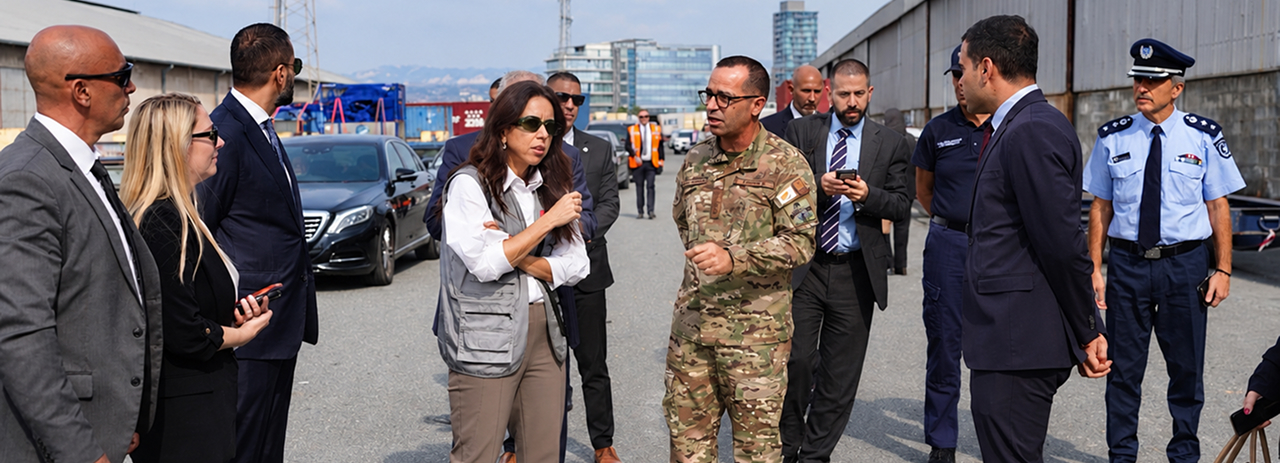
The people the UN serves summon us to make that choice today, not in promise, but in proof. In my decades of public service, I have seen that proof. I have seen adversaries agree on the release of prisoners, neighbours at war agree on a corridor for food and medicine, and a divided Security Council speak with one voice, in words it had never before. My career has been defined by helping reach agreement in rooms in which it was proclaimed impossible.
1. The Price of Compromise
At the heart of the UN sits a wager: that states will give up a little today to gain a great deal together over time. For eight decades, that wager has paid off. Smallpox survives only in laboratory freezers. The hole in the ozone layer is closing. Nuclear weapons, once expected to spread to dozens of states, remain in the hands of a few. In each instance, governments had to accept a cost they could see, in exchange for a benefit they could not.
The price of compromise is immediate and often borne individually; the reward is distant and shared. As confidence thins both in the UN and between states, fewer governments are willing to make that trade. Even the Non-Proliferation Treaty, the most consequential bargain of the nuclear age, has now ended three review conferences in a row without an agreed outcome.
States have not stopped needing to partner with one another, but they no longer trust that cooperation will yield sufficient returns. Rebuilding that trust, with faster, more certain, and more realistic results, is the work of the UN. Promises made must be kept. Where the UN’s leverage is greatest, so should its presence be. And the Organisation must become an active agent in its own transformation.
“When the rewards of agreement can no longer be seen, agreement is no longer sought.”
2. What the Secretary-General is For
The Charter gives the Secretary-General no army and no vote. But the position, held well, entails a different kind of power. Her independence empowers her to bring others to agreement, and that depends on trust. I will be the stubbornly optimistic, relentless diplomat I have always been in this endeavor.
I take Article 100 of the UN Charter and the responsibility to act “with the interests of the United Nations only in view,” extremely seriously. This is why, effective immediately I have taken a leave of absence from my position as Minister of State in the Ministry of Foreign Affairs of the United Arab Emirates. I wish to offer myself to this office as I would serve it: speaking frankly with every government and answering to none. There will be no exemptions for friends and no grudges against critics.
I understand the duties, prerogatives, and limits of this office. Member States write the mandates, approve the budgets, and make the decisions. The Secretary-General cannot compel consensus, but she can bring the evidence, frame the options, provide strategic direction, and push open the door for all parties when they are ready to walk through it.
I will judge my own work by the impact it produces, not by what it proclaims. I will speak plainly when silence risks abandoning people, and work quietly when noise endangers them. And I will spend more of my time near front lines, and where agreements can be found.
3. Peace: First Agreements and First Actors
Lasting peace is rarely made in a single stroke. More often, it is assembled from smaller agreements: a local truce, an exchange of prisoners, a corridor for food and medicine.. Each takes a modest but important step, offering proof that the other side can keep its word.
Prevention is the most fundamental of these steps, and the least costly. As Secretary-General, I will engage in quiet diplomacy to keep disputes from escalating. Where conflict breaks out, I will prioritise the pursuit of those first agreements in the Organisation’s work, rather than leaving them to chance. The Secretariat, working with the Security Council and Member States, will identify what can be agreed now, offer itself to the parties to help reach it, pursue it without pause, and verify that it holds. Neither ad hoc nor temporary, these solutions are steps along the way to broader agreement.
The UN need not lead every process, but it should be ready to be in every room where its presence has value. Much of the world’s mediation now runs through regional organisations and ad hoc mediation structures. This Organisation’s role is to make solutions possible, which means working flexibly with whichever partners the parties trust.
Rather than forcing a fit with existing structures, UN peace efforts need to re-centre those closest to the conflict. They have the greatest stake in securing a lasting peace, and often, the most nuanced understanding of what is needed to get there. These first actors need a responsive, courageous Secretariat empowered to act with the urgency the situation demands.
In my experience at the UN, too often the Secretariat and the Member States did not work in partnership towards a shared objective. I will change that. And when the Security Council or parties to conflict seek the Organisation’s support, particularly in service of a mediation, the Secretariat should be able to answer quickly and constructively. I will build a more dynamic and candid dialogue with the Security Council on peace operations, offering timely and practical options and ensuring the Organisation is ready to deploy effective missions when the Council mandates them. I will ask the Council to judge every peacekeeping mission by the day it can responsibly leave and when the peace it protects can hold without it.
“The UN need not lead every process, but it should be ready to be in every room where its presence has value.”
4. Development: Results a Country Can Point To
The UN development system is ready for recalibration. This is in part because its successes have helped reshape the world it serves: more than a billion people have climbed out of poverty since 1990. Economic power has shifted and countries today have increasingly sophisticated development strategies and greater means to pursue them.
At the same time, progress on achieving the 2030 Agenda for Sustainable Development remains deeply uneven. Countries affected by conflict and fragility continue to face the greatest challenges, extreme poverty and preventable maternal and child deaths are increasingly concentrated in these settings, while many countries continue to face severe financing constraints and rising debt burdens, compounded by declining official development assistance.
The development assistance that funded the last thirty years is not coming back in the same way. A UN that responds by asking for more of the same will not be heard. A UN that shows what each contribution delivered, country by country, community by community, will be.
Some countries seek greater access to investment, technology, and knowledge to drive economic growth, while others require sustained development assistance to strengthen institutions and deliver basic services. Many need both.
The UN should make better use of its expertise, partnerships, and field presence, while ensuring that aid remains available where it is essential. It must also retain its ability to deliver lifesaving humanitarian assistance when lives depend upon it.
Under my leadership, the development system will be judged by what each country can point to, not by what the system spends.
- National priorities will drive development cooperation. I will work to overcome fragmented, agency-driven programming, focusing the UN on nationally determined priorities.
- Put jobs at the centre. More than a billion young people will enter the workforce in developing countries over the next fifteen years. Work is the outcome most governments ask about first and the one the UN is least prepared to deliver. That will change.
- Expand development opportunities in fragile settings. Delivering equitable progress on the SDGs increasingly depends on reaching communities affected by conflict, fragility, and disasters. This means development actors must work more closely with humanitarian actors to get involved as soon as development opportunities arise.
- Address the mispricing of risk. I will work more closely with development banks and private sector partners to improve the data available to investors, helping them assess risks more accurately and bring down the cost of capital where risks are overstated.
- Champion fairer debt solutions. A range of credible proposals to address debt distress and reform international debt mechanisms is already on the table. I will use the Secretary-General’s convening authority to build agreement around practical solutions and turn these proposals into action.
- Build new partnerships with philanthropy and the private sector. I will work more closely with philanthropic foundations and the business community to develop blended financing models. These partnerships can test promising solutions, demonstrate results, and attract broader investment to bring successful initiatives to scale but will require the UN to work differently and measure in success in capital mobilised and jobs delivered.
Member States will soon begin negotiations on the 2030 Sustainable Development Goals’ successor. I will help them forge an agreement that reflects their aspirations for the future with commitments that governments can explain to their citizens, and whose promises the world can keep.
5. Human Rights: A Shared Foundation for Agreement
Human rights are a common fabric that unites all of humankind, connecting us through the recognition of the inherent dignity of every person. Human rights principles do not belong to any particular set of countries. They are expressions of equality and tolerance that are universal. They echo across communities and are deeply rooted in our shared history. They must be promoted and protected with rigour and without double standards. The UN’s credibility on human rights depends on consistency in application.
The states that emerged from the slaughter and ruin of two world wars did not proclaim the human rights principles in the UN Charter and the Universal Declaration of Human Rights as philosophical ideals alone. Rather, they are binding commitments made with the understanding that peace and justice are two sides of the same coin, and that the promotion of human rights goes hand in hand with development that is sustainable.
That the three pillars of the UN are mutually reinforcing tells a simple truth. For all of the activities of the UN, its presence around the world and its work in serving its Member States, there is a common purpose: the betterment of humankind. Protecting human rights creates the conditions for peace and unlocks development. Addressing security fosters growth and bolsters human dignity.
As Secretary-General, I will defend international law, the Charter, and the Universal Declaration of Human Rights, whose eightieth anniversary will fall during the coming term. I will make the case for funding the human rights pillar at a level that matches its mandate.
“The UN’s credibility depends on consistency in application.”
6. What Tomorrow Needs
Emerging technologies like artificial intelligence and biotechnology provide a strategic opening to build agreement. During the Cold War, rivals who agreed on almost nothing still ultimately agreed to notify each other before launching ballistic missiles, because the alternative was catastrophe by misunderstanding.
AI can be a rallying point. Especially its potential for development. But that potential means little if the countries with the most to gain are the last to gain access. Making AI accessible means ensuring AI delivers on its promise to be a great equaliser and does not further entrench inequalities. I will work to turn forums of debate into confidence-building measures and practical voluntary arrangements that help consolidate global cooperation, exchange best practices, and promote fair and people-centred opportunities:
- Opt-in incident-reporting mechanisms that facilitate real-time knowledge sharing;
- Voluntary, shared tests for the most powerful systems;
- Broadened access and participation for the many countries that live with, but do not build, these technologies.
Climate change is reshaping conditions for development, peace, and prosperity everywhere. The UN has a clear role: to help Member States anticipate its effects, build resilience where fragility is greatest, and deliver on the commitments they have made. I will give that work the priority it deserves.
Nearly half the world’s people are under thirty. They will live longest with the fruits of our agreements, and the consequences of our failures. Many of them already run companies, cities, and movements. They do not need to be told their time will come. The UN should borrow their impatience, and put them where decisions are made.
7. An Organisation Worth Paying For
A more focused UN does less where others can deliver, and more where only it can. Member States will not invest in a UN that asks for faith. They will invest in one that shows its returns. I intend to show them.
The Secretariat will:
- Report results against costs. Every major Secretariat programme will report what it achieved, in a form a finance minister can read in an afternoon. I will invite the funds and agencies to do the same.
- Tackle duplication where it starts. Within the Secretariat, I will consolidate overlapping work directly. Across the wider system, I will put the evidence before Member States and governing boards, so that where several entities do the same work in the same place, they can decide to have it done once.
- Be direct about arrears. Because no institution can plan its future on arrears, I will be direct with every government about what relies upon their contributions. It is a shared responsibility.
The people of the UN are the reason this Organisation makes progress every day, often at real risk to themselves. I am mindful that institutional change is hardest on those who show up to do the work. This transition may ask more of them. In return, I will give more back:
- Work with a clear purpose;
- Reward results, rather than risk avoidance;
- Protection in danger.
My senior team will be chosen for their excellence, and they will reflect the world they serve and the principles we uphold.
“Member States will not invest in a UN that asks for faith. They will invest in one that shows its returns.”
8. The Work Before Us
My two young boys have taught me more about patience, and urgency, than any negotiation. Like all parents, I live on two clocks at once: their immediate needs today, and the long and happy future I owe them. Neither can wait for the other. The same is true of the UN.
The UN was never meant to agree with the world. It was built to help the world find agreement. That is why I offer myself for this office: to do the work I know best to make agreement worthwhile.
Lana Nusseibeh
Candidate for Secretary-General of the United Nations

